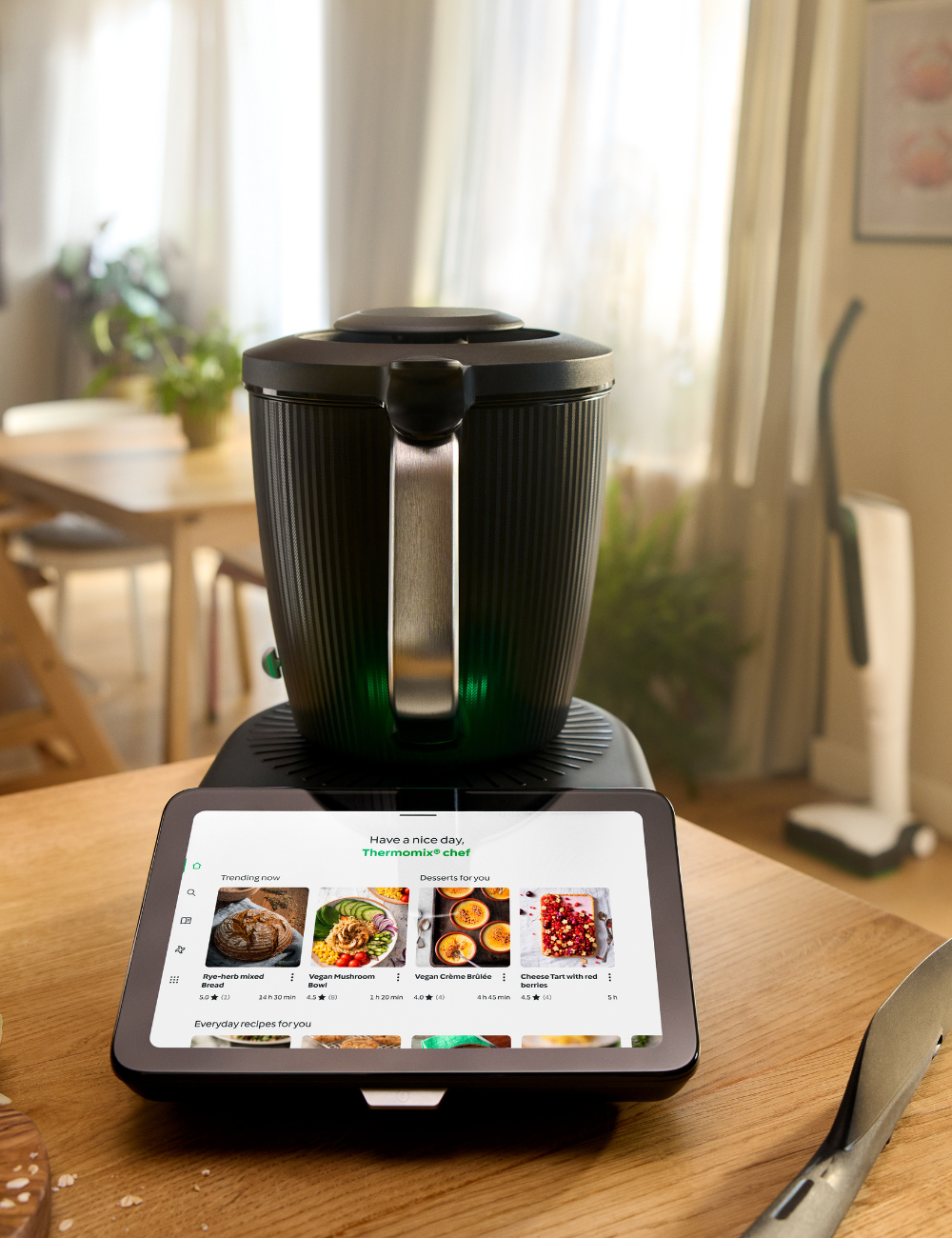
What a Thermomix Can and Cannot Do
The honest capability and limitation guide, vented lid and all
What can and cannot a Thermomix do?
A Thermomix can chop, blend, mix, knead, weigh, cook at set temperatures, steam, sous-vide, ferment, slow-cook, emulsify and mill, replacing around a dozen kitchen tools. It cannot pressure-cook, deep-fry, air-fry or crisp-roast and sear, because the lid is vented by design and there is no dry radiant heat, so you finish those tasks in a pan or oven.
A Thermomix does almost everything a recipe asks of a stirred, blended, steamed or gently cooked dish, and it does it from one bowl under guided control. It cannot pressure-cook, deep-fry, air-fry or crisp-roast, because the lid is vented by design and there is no dry radiant heat, so a pan or oven handles the final browning.
That is the whole honest picture in two sentences. The rest of this page explains each side so you know exactly what you are buying before you spend $2,299 CAD.
What a Thermomix Does Well
The Thermomix is built around one heated, weighing, self-stirring bowl, and that single design covers a surprising range of cooking. As a Vancouver-based consultant and TM7 owner, here is the honest list of what it genuinely handles every day:
- Chop, blend and mix. Vegetables, herbs, smoothies, soups, batters and sauces, from coarse to silky, by setting the blade speed.
- Knead dough. Bread, pizza, brioche and pastry come together to a precise consistency, hands-off.
- Weigh. A 1-gram integrated scale tares automatically between ingredients, so there is no separate scale.
- Cook at set temperatures. It holds a steady, exact temperature while stirring, which is why it does not scorch curries, risotto or custard.
- Steam. The Varoma steamer sits on top and cooks fish, vegetables and dumplings in layers while the bowl works below.
- Sous-vide. Gentle low-temperature cooking for eggs, fish and similar delicate proteins.
- Ferment and slow-cook. Controlled warmth for yogurt, doughs and long, low braises.
- Emulsify. Hollandaise, mayonnaise and vinaigrettes hold together because the temperature and speed stay constant.
- Mill and grind. Sugar, grains, spices and nuts grind down to flour, butter or powder.
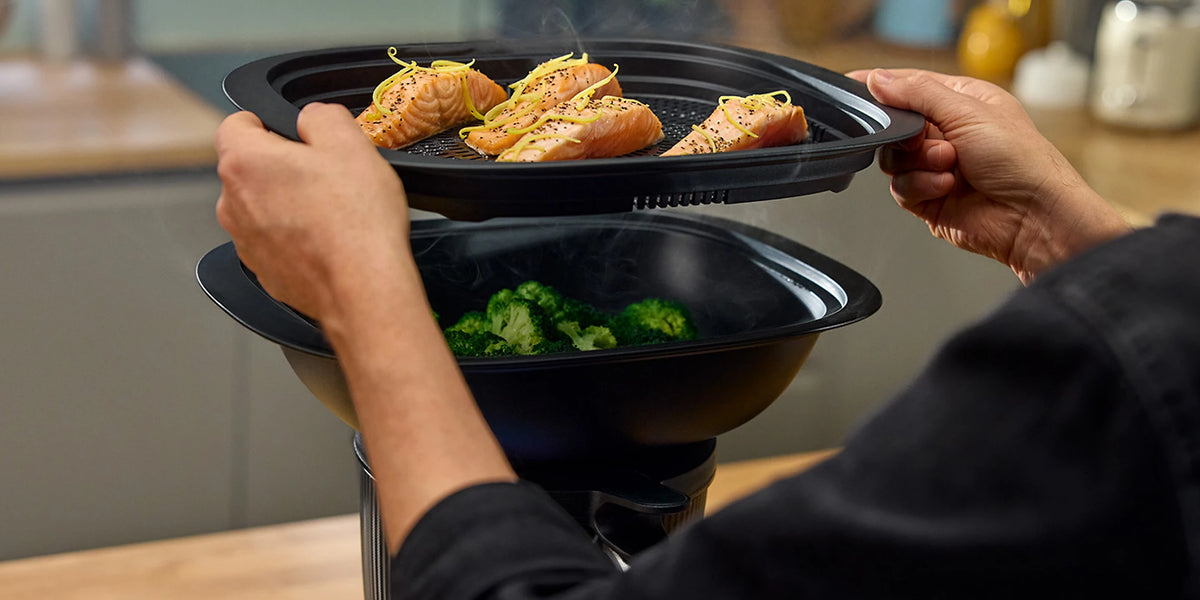
If a task is stirred, blended, steamed, weighed or held at a precise temperature, the Thermomix is excellent at it. For the full meal-by-meal version, see what the TM7 actually cooks and what you can make with a Thermomix.
What a Thermomix Cannot Do
Being honest about the limits is the fastest way to know whether this machine fits how you cook. Almost every "no" comes back to one design choice: the lid is vented, so steam escapes and the bowl never builds pressure or runs dry and hot. Here is the plain breakdown:
| Task | Thermomix? | Why |
|---|---|---|
| Pressure cooking | No | The lid is vented by design, so it cannot build and hold pressure like an Instant Pot |
| Deep frying | No | It cannot reach or safely hold the high oil temperatures deep frying needs, and the vented lid is not built for a hot oil bath |
| Air frying | No | There is no dry circulating hot air, so it cannot crisp the way an air fryer does |
| Crisp roasting or searing a steak | No | There is no dry radiant heat or large hot surface, so it cannot brown or develop a crust |
A note on browning meat: the Thermomix can soften and lightly cook ground or diced meat at its top temperature while stirring, which is fine for a bolognese or chili base, but it does not deliver the deep, dry, caramelized sear you get from a hot pan. If a recipe wants a proper crust, that step belongs on the stove.
Workarounds
None of these limits leave a dish unfinished, they just move one step out of the bowl. The pattern is the same every time: the Thermomix does the cooking, weighing, stirring and steaming, and your existing pan or oven does the final crisp.
- For a seared steak or browned meat, sear in a hot cast-iron pan, then let the Thermomix handle the sauce or the sides.
- For crisp roasting, finish in the oven while the bowl builds the accompanying soup, mash or gravy.
- For anything you would deep-fry or air-fry, use your existing fryer or oven, and lean on the Thermomix for the batter, dough or dip that goes with it.
In a real Canadian kitchen this division of labour is barely noticeable. You are running the bowl and a pan at the same time, which is how a full meal in layers comes together faster, not slower.
How It Still Replaces About a Dozen Tools
Even with those honest limits, one Thermomix takes the place of roughly a dozen separate appliances, because the tasks it does cover the bulk of everyday cooking:
- Blender
- Food processor
- Stand mixer
- Slow cooker
- Rice cooker
- Steamer (the Varoma)
- Yogurt maker
- Sous-vide setup
- Grain mill
- Grinder
- Kitchen scale
- Soup maker
That is why most buyers reclaim a noticeable amount of counter space within the first month. My own countertop cleared out significantly after I started cooking with mine regularly. Whether that trade is right for you comes down to how often you cook: see is a Thermomix worth it in Canada for the honest cost math, what a Thermomix is for the plain-English overview, and how it compares to a Vitamix if a high-end blender is the alternative you are weighing.
Frequently Asked Questions
What can't you cook in a Thermomix?
You cannot pressure-cook, deep-fry, air-fry or crisp-roast and sear in a Thermomix. The lid is vented by design, so the bowl never builds pressure, holds deep-fry oil temperatures, circulates dry hot air, or develops a dry caramelized crust. Everything else, from soups and sauces to dough, custard and steamed fish, it handles well. For those few tasks you finish in a pan or oven.
Can a Thermomix make scrambled eggs?
Yes. The Thermomix makes scrambled eggs by gently heating and stirring at a low set temperature, so they come out soft and creamy rather than rubbery. It is one of the easiest things to make on the machine and a good first Guided Cooking session for a new owner.
Can a Thermomix peel potatoes?
No, a Thermomix does not peel potatoes. It can chop, dice, blend and cook them once they are peeled, and it makes excellent mashed and pureed potato, but the peeling itself is still a job for a peeler or knife.
Do professional chefs use Thermomix?
Yes. Many professional kitchens use a Thermomix for sauces, emulsions, purees, soups and precise low-temperature work, because it holds an exact temperature and emulsifies reliably. The same machine that suits a professional kitchen also runs Guided Cooking for a first-time home cook, which is part of why it is so widely used.
What are the disadvantages of a Thermomix?
The honest disadvantages are the price ($2,299 CAD), and the capability gaps: it cannot pressure-cook, deep-fry, air-fry or crisp-roast, because of the vented lid. It also has a learning curve and relies on the Cookidoo platform for its best Guided Cooking experience. For most home cooks the dozen tools it replaces outweigh those limits, but it is worth knowing them before you buy.