How to Use a Thermomix in Canada: Functions, Modes and Cleaning
What every function does, from the butterfly whisk to the pre-clean cycle, explained simply
How do you use a Thermomix?
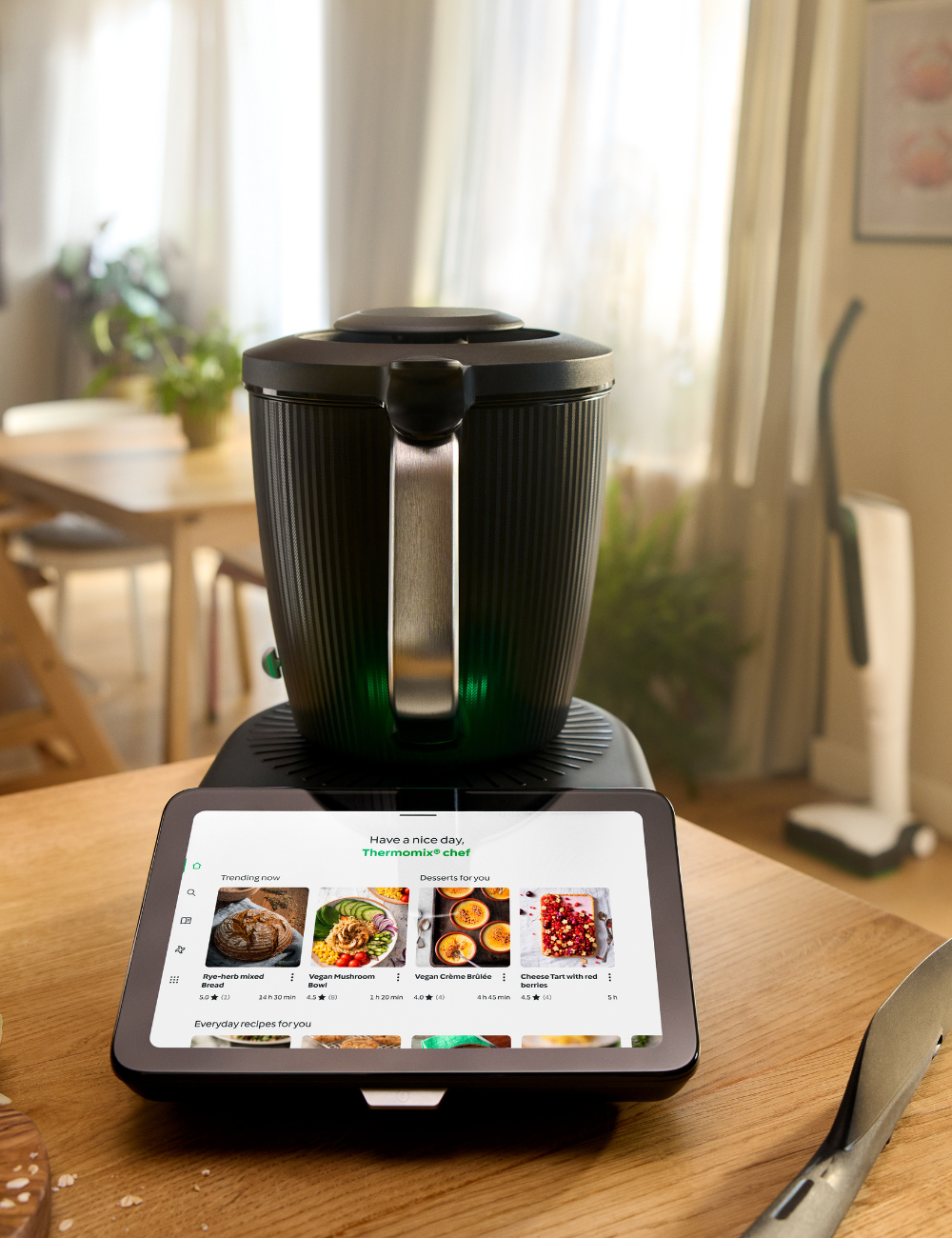
You use a Thermomix by choosing a recipe on the touchscreen and following Guided Cooking, where the TM7 sets the temperature, time and blade speed for each step while you add ingredients when the screen asks. The same bowl weighs, chops, blends, mixes, kneads, steams, ferments and slow-cooks, and you can also run any function manually if you prefer to cook freehand.
The Short Answer
Using a Thermomix TM7 is mostly about letting the machine do the technical part while you handle the ingredients. You pick a recipe, the touchscreen walks you through each step, and the bowl weighs, chops, blends, mixes, kneads, steams and cooks without you needing to juggle separate appliances. Everything happens in one bowl with one heating element and one integrated scale, and the same functions are available whether you follow a recipe or cook on your own.
I am an independent Vorwerk Thermomix consultant based in Vancouver, and the question I hear most from new owners is simply "where do I start?" The honest answer is that you start by cooking. The TM7 is built so that your first Guided Cooking session teaches you most of what you need to know.
The main functions and what they do
The TM7 packs more than twenty kitchen tasks into one machine. Here are the core functions, what each one does, and a everyday example so you can picture it in your own kitchen.
| Function | What it does | Example use |
|---|---|---|
| Weigh (built-in scale) | Measures ingredients directly in the bowl and tares to zero between additions | Adding flour and sugar by weight without dirtying a separate scale |
| Chop | Breaks down vegetables, nuts or herbs in short bursts | Onions and garlic for a soup base |
| Blend | Turns cooked or raw ingredients into a smooth puree | A silky vegetable soup or a fruit smoothie |
| Mix | Combines ingredients gently without overworking them | Folding a batter or stirring a sauce |
| Knead / dough | Works dough to the consistency a recipe calls for | Pizza dough, bread dough or brioche |
| Steam (Varoma + basket) | Cooks food with gentle steam on one or more levels | Fish on top, vegetables below, sauce in the bowl |
| Sous-vide | Holds a low, steady temperature for tender results | Chicken breast or eggs cooked precisely |
| Ferment | Keeps a warm, stable environment for cultures | Yogurt or a sourdough starter |
| Slow-cook | Cooks gently over a long period at low heat | A stew or braise left to develop flavour |
| High-temp heating | Heats up to roughly 160C for sautéing and reducing | Sweating onions or reducing a sauce |
| Butterfly whisk | Whips and aerates without chopping | Whipped cream or beaten egg whites |
| Pre-cleaning cycle | Runs warm water and the blade to rinse the bowl | A quick rinse between two recipe stages |
A few things the TM7 does not do, so you can plan around them: it cannot pressure-cook, deep-fry, air-fry or crisp-roast. For golden, crispy finishes you still reach for your oven or stovetop. Everything else on a typical weeknight tends to happen in the one bowl.
Guided Cooking vs manual mode
There are really two ways to cook with the TM7, and most owners use both.
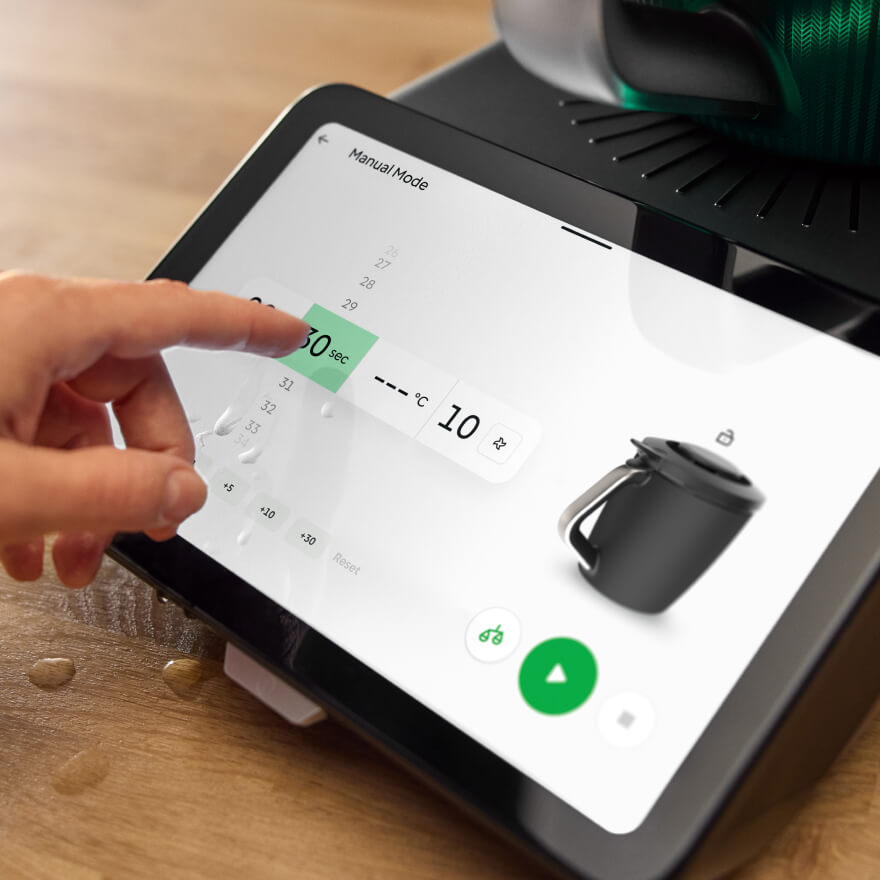
Guided Cooking is the connected experience through Cookidoo. You choose a recipe on the touchscreen, and the machine runs it step by step. It tells you which ingredient to add and the weight to aim for, then sets the temperature, the time and the blade speed for that step automatically. You add ingredients when prompted and tap to continue. This is the mode that makes the Thermomix feel approachable, because there is no guesswork about settings.
Manual mode is the freehand way to cook. You set the temperature, the time and the speed yourself, the same way you would dial in a blender or a stovetop pot. This is what you use for your own family recipes, for quick tasks like chopping an onion, or for tweaking a dish on the fly. The same functions are available in both modes, so manual cooking is simply Guided Cooking with you in the driver's seat.
Using the Varoma and simmering basket
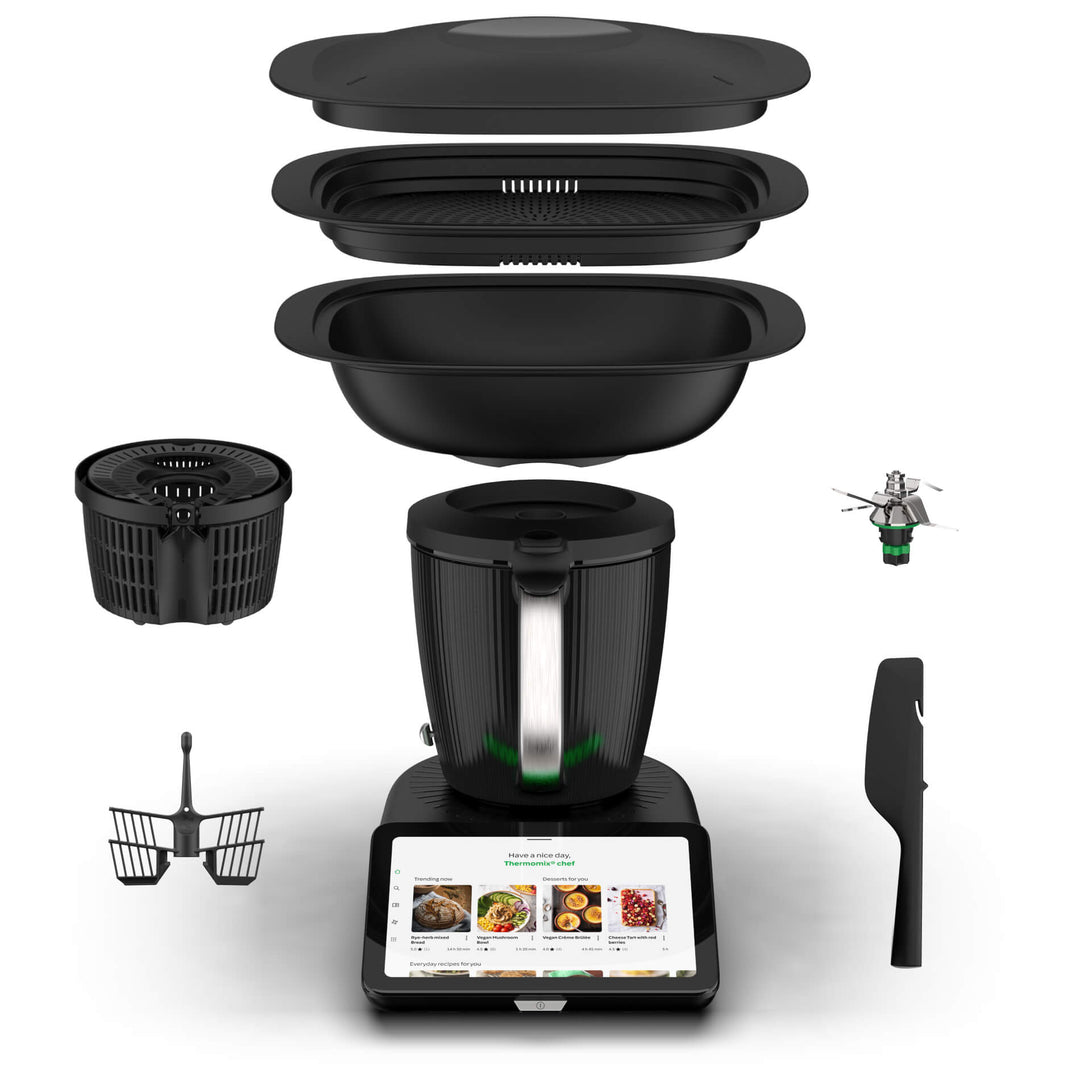
Steaming is one of the features new owners underestimate. The TM7 comes with two steaming tools that work together.
The simmering basket sits inside the bowl. It holds food above the cooking liquid so it steams or poaches gently, and it doubles as a strainer when you need to drain pasta or separate stock from solids. The Varoma is the larger attachment that sits on top of the lid, with a tray and a deeper dish, so you can steam on two levels at once. Because the bowl below can be cooking something at the same time, you can build a full meal in one run: a sauce simmering in the bowl, vegetables in the simmering basket, and fish or dumplings in the Varoma above. For a deeper walkthrough of multi-level steaming, see the Varoma guide.
Sous-vide and slow cooking
The TM7 is genuinely good at the low and slow end of cooking, which is where a lot of home cooks feel least confident.
For sous-vide, the machine holds a low, steady temperature in the bowl so proteins cook evenly from edge to edge. This is the technique behind perfectly tender chicken or precisely set eggs, and the TM7 manages the temperature for you so there is no separate immersion device to monitor.
For slow cooking, the TM7 keeps a gentle heat over a long stretch, which is ideal for stews, braises and pulled meats that reward patience. You can start a slow-cook before you leave for the day and come back to dinner already underway. If you want a sense of the range of dishes this opens up, the recipes hub is a good place to browse, and the beginner's guide lays out a sensible first week.
Cleaning your Thermomix
Cleanup is far simpler than most people expect, because the bowl cleans itself most of the way.
After cooking, you add a little warm water and a drop of dish soap to the bowl, close the lid, and run the pre-cleaning cycle. The blade and warm water rinse away the bulk of the residue in under a minute, which is usually enough between two stages of the same meal. For a thorough clean, the bowl, lid, blade, simmering basket and Varoma are all dishwasher-safe, so a fuller wash is hands-off. The touchscreen and exterior wipe down with a damp cloth. There are no awkward crevices to scrub, which is part of why the TM7 tends to get used daily rather than parked in a cupboard. The right accessories, like a spatula and a cleaning brush, make the routine even quicker.
Frequently Asked Questions
How do you use a Thermomix?
You choose a recipe on the touchscreen and follow Guided Cooking, where the TM7 sets the temperature, time and blade speed for each step while you add ingredients when prompted. You can also work in manual mode, setting those values yourself for your own recipes or quick tasks. The same bowl weighs, chops, blends, kneads, steams and cooks, so most of a meal happens in one place.
What are the functions of a Thermomix?
The TM7 weighs ingredients with its built-in scale, chops, blends, mixes, kneads dough, steams with the Varoma and simmering basket, runs sous-vide, ferments, slow-cooks and heats up to roughly 160C. It includes a butterfly whisk for whipping and a pre-cleaning cycle. It cannot pressure-cook, deep-fry, air-fry or crisp-roast, so an oven still has a place for crispy finishes.
How do you clean a Thermomix?
For a quick clean, add warm water and a drop of dish soap to the bowl and run the pre-cleaning cycle, which rinses away most residue in under a minute. For a deeper clean, the bowl, lid, blade, simmering basket and Varoma are all dishwasher-safe, and the touchscreen and exterior wipe down with a damp cloth.
Can a Thermomix do sous-vide?
Yes. The TM7 holds a low, steady temperature in the bowl so proteins cook evenly throughout, which is the core of the sous-vide technique. The machine manages the temperature for you, so there is no separate immersion circulator to set up or watch.
Do you need to know how to cook to use a Thermomix?
No. Guided Cooking is designed for people who have never cooked confidently before. The screen tells you what to add, when to add it and how much, and the machine handles the settings. Most new owners feel comfortable within their first week, and the beginner's guide walks through a gentle first ten dishes.