Easy Side Hustles for Food Lovers in Canada (Beyond Uber and DoorDash)
Honest side-hustle options for Canadians who love to cook, from culinary social media to direct-sales kitchen brands.
Learn About Thermomix as a Side HustleWhat are easy side hustles for people who love cooking in Canada?
Most side-hustle listicles for Canada cover Uber, DoorDash, freelancing, and Rover. If you love cooking specifically, the realistic options are: paid culinary social-media (slow to monetize), private chef pop-ups (high upfront work), recipe-developer freelance work (writing-skill-dependent), and direct-sales kitchen brands like Thermomix or Epicure (commission-based, training-provided). Each has very different time and earnings profiles.
The side-hustle listicle problem
Search "side hustles Canada 2026" and you will find article after article recommending Uber, DoorDash, TaskRabbit, Rover, Fiverr, and Upwork. These are real options. They are also completely unrelated to why you opened this article, which is that you genuinely love cooking and want to turn that into income, not deliver someone else's food in a car.
This article is for that person. The options below are for Canadians who cook, who care about food, and who want a side income that reflects that. They are ranked roughly from slowest to fastest time-to-first-dollar, with honest notes on what each requires and what the realistic ceiling looks like.
What "side hustle" means in Canada: the CRA reality
Before the list: a note on how the Canada Revenue Agency treats side income. Any income you earn outside of your primary employment is reportable. If you are self-employed, you will receive a T4A from clients or companies that paid you more than $500 in a calendar year. If you are running your own culinary business, you may also need to register for GST/HST once your taxable revenues exceed the small supplier threshold in a calendar year; confirm the current figure at canada.ca or with a tax professional.
Side income from any of the options below is deductible against legitimate business expenses: ingredients used for recipe testing, a portion of your home internet if you use it for business, food photography equipment, professional development courses, mileage for business-related travel. Keeping clean records from the start matters, even at small scale. Your accountant (or a CRA publication like the T4002 guide for self-employed income) is the right resource for your specific situation.
Why the standard listicle doesn't work for foodies
Uber and DoorDash pay you to use a car. TaskRabbit pays you to move furniture or assemble IKEA shelves. Rover pays you to walk dogs. None of these use the skill you have built, which is knowing how to cook well, how to build a menu, how to explain culinary technique to someone who has never tried it.
A food-related side hustle should play to what you already know. That does not mean it will be easy. But it should at least be something you are genuinely building on rather than starting from zero.
Option 1: Paid culinary social media
Realistic timeline to first dollar: 12-18 months minimum
Building a food-focused social media presence that generates meaningful income is slow. The platforms that pay creators directly (YouTube's Partner Program, TikTok's creator fund, Instagram's various bonus programs) all require threshold follower counts or watch-hour minimums before payments begin. YouTube's Partner Program requires 1,000 subscribers and 4,000 watch hours before monetization unlocks. TikTok's creator payouts at early follower counts are negligible.
The faster monetization path is brand partnerships, where a food brand pays you to feature their product in your content. These typically start at the 5,000-10,000 follower range for micro-influencer deals, with meaningful rates appearing at 25,000+. Building to that audience while producing consistent, quality food content takes most creators 12-18 months of regular posting.
Upfront costs include a decent camera (your iPhone works initially, but dedicated camera and lighting make a difference at mid-tier), basic food photography props, and ingredients for test shoots. Monthly ingredient cost for recipe content varies depending on your cuisine focus and posting frequency.
If you are willing to invest the time, the ceiling is high. A mid-tier Canadian food creator with 50,000-100,000 engaged followers can earn meaningful income from a mix of brand partnerships, affiliate commissions, and platform payouts. But the realistic timeline to get there is 2-3 years of consistent effort, not 2-3 months.
Option 2: Private chef pop-ups and meal prep
Realistic timeline to first dollar: 4-8 weeks with the right setup
Private chef pop-ups and meal prep services are one of the faster paths to first income for someone with genuine cooking skill. The model: you cook for clients in their home, or you batch-cook meals in a licensed commercial kitchen and deliver them.
The upfront requirements are higher than most side hustles:
Food handler certification: Required in most Canadian provinces. Ontario's Food Handler Certificate, BC's FoodSafe Level 1, and equivalent programs in other provinces are typically 1-day courses plus an exam. Costs vary by provider and province; check your provincial food-safety authority for current pricing.
Liability insurance: If you are cooking in someone's home or selling food commercially, personal liability insurance (and possibly commercial kitchen coverage) protects you if something goes wrong. Rates vary; get quotes from Canadian business insurance providers before committing to this path.
Commercial kitchen access: If you are producing meals for sale, most provinces require food to be prepared in an inspected commercial kitchen rather than your home kitchen. Rental rates vary by city and facility. Shared kitchen co-ops often offer more affordable membership rates than hourly rentals.
If the regulatory requirements seem like a lot, that is accurate. Private chef work is legitimately more setup-intensive than the other options on this list. The payoff is that rates for private chef work are meaningfully higher per hour than most other food-adjacent income.
Income potential is highly variable and depends on your market, your cuisine specialization, and how aggressively you market.
Option 3: Recipe development freelance
Realistic timeline to first dollar: 2-6 months
Food brands, media companies, cookbook publishers, and food apps all commission recipe development from independent developers. The rate for a tested, styled, and photographed recipe varies considerably depending on the client, the rights required, and whether photography is included.
This option is more writing-skill-dependent than it might appear. Recipe developers are not just people who cook well; they are technical writers who can convey a recipe with precision, consistency, and appropriate detail for the audience. A recipe written for a professional chef differs significantly from one written for a beginner home cook, and brands hire developers who can hit a specific voice and style.
Breaking into the market typically starts with building a portfolio. Publishing tested recipes on a personal food blog or social account, entering recipe development competitions (major food brands run these annually), and approaching local food brands with a speculative pitch are the common entry points.
Canadian food industry organizations, regional food media, and local brands (particularly in BC's food and beverage sector) are often more accessible to early-career recipe developers than national brands. Starting local before pitching national is the standard advice from people who have done it.
Option 4: Direct-sales kitchen brands (the consultant path)
Realistic timeline to first dollar: 4-6 weeks for an active consultant
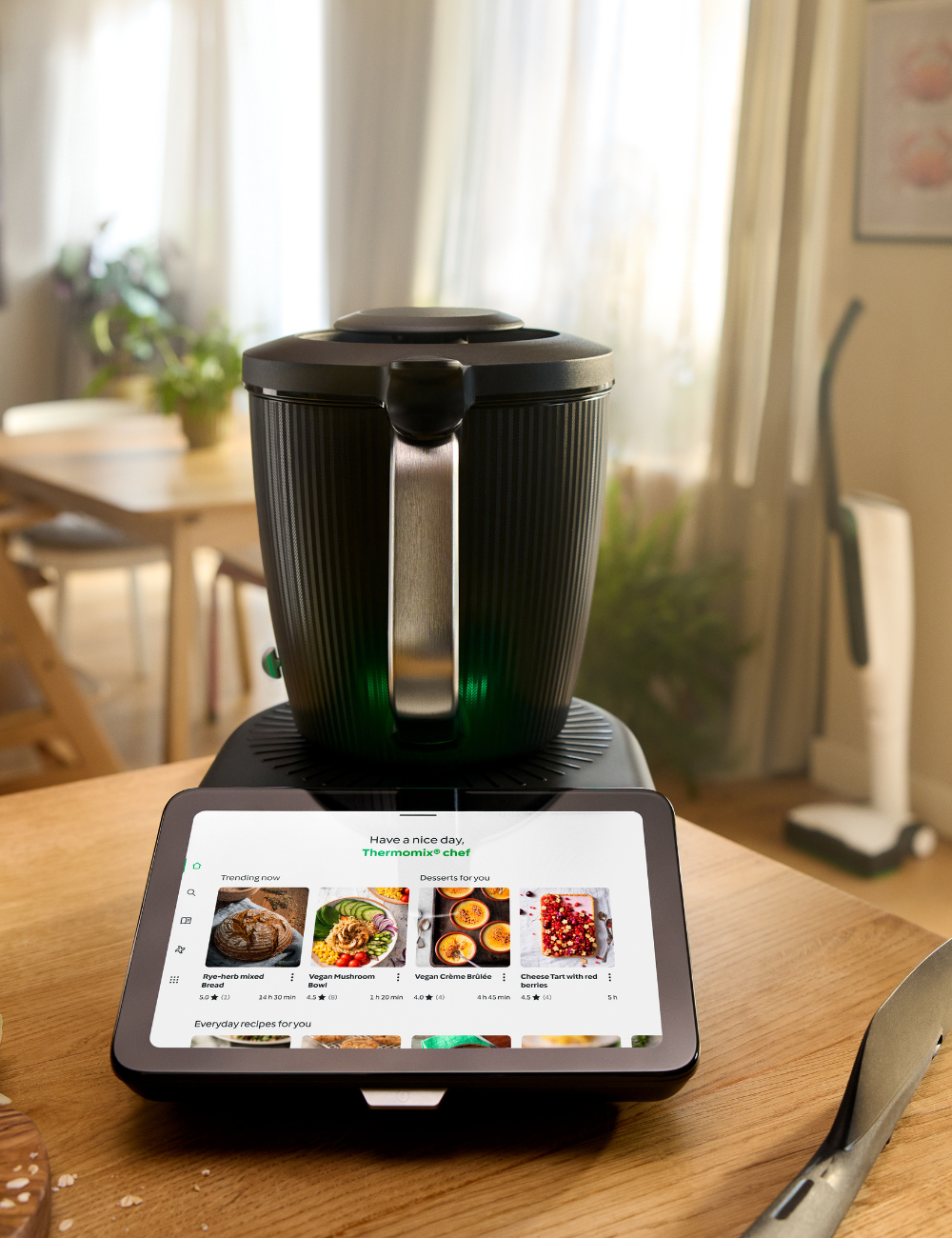
Direct-sales kitchen companies, including Thermomix and Epicure, operate on a consultant model: you earn a commission on the products you sell, with training and event structure provided by the company. This is fundamentally different from the first three options in one key way: you do not need to build the product, the brand, or the recipe library yourself. You are representing an existing product with an established proof of concept.
The tradeoffs:
You are selling someone else's product and brand, not building your own. Your income depends on your sales activity rather than building an asset (like a social media audience or a client roster) that compounds over time.
The startup costs are lower than private chef and social media. Becoming a Thermomix consultant in Canada involves a starter kit and Vorwerk's training program rather than commercial kitchen rental, food photography equipment, or 18 months of brand-building.
Thermomix specifically sells a single high-ticket appliance (the TM7), which means each commission is substantial but volume is lower. Epicure sells consumable food products at lower price points, which means smaller individual commissions but more repeat purchasing. For a detailed comparison of these models, the Thermomix vs other direct-sales companies page covers the structural differences.
The time commitment for an active Thermomix consultant running 2-3 Cookidoo events per month is roughly 10-15 hours per week. For a more detailed picture of what those hours look like, see what a Thermomix consultant does day-to-day.
Earnings depend on your retail sales activity, your local market, and the effort you invest. Commissions are paid on personal retail volume, not on recruitment alone. For a fuller picture of income ranges across activity levels, see the Thermomix consultant income page.
Flexibility and time for Canadian parents and shift workers

One factor that makes food-related side hustles appealing to parents with young children, shift workers, and people with variable schedules is flexibility. None of the options above require you to be available at fixed hours every week.
Culinary social media and recipe development can be done entirely around your existing schedule. Private chef pop-up work is booked in advance and can accommodate the schedule you have, though it does require blocks of several hours rather than scattered minutes.
The direct-sales model (Thermomix consulting) is deliberately flexible: Cookidoo events are scheduled at your convenience, follow-up conversations happen over text and email on your timeline, and the administrative work is light enough to fit into odd hours. This is one of the reasons the consultant model attracts parents, shift nurses, teachers with summers free, and others whose time availability is non-standard. See the day-in-life page for what a typical week looks like in practice.
CRA tax reality for food side hustles
All income from these options is taxable. The vehicle changes depending on the type of activity:
If you are selling food or services as a sole proprietor, report on your T1 personal return as self-employment income (T2125). Deduct legitimate business expenses against revenue.
If you receive T4A slips (which direct-sales companies like Vorwerk issue to Canadian consultants), those amounts report your gross commission income. You still report net business income after expenses.
GST/HST registration is required once your taxable revenues from all business activities exceed the small supplier threshold in a calendar year. Below that threshold, registration is optional. Above it, it is mandatory. Confirm the current threshold at canada.ca or with a tax professional.
Provincial requirements vary: BC has its own PST registration requirements for some categories of food service. Quebec has a QST system that parallels GST. If you are operating in multiple provinces, the GST/HST threshold is based on total Canadian revenues, not provincial revenues.
Ingredients used for recipes you publish or sell, subscriptions to culinary platforms used for your business, professional development courses, and a portion of your home internet and phone costs if used for business purposes are all potentially deductible. A bookkeeper who works with self-employed clients is worth the cost if your side income grows meaningfully.
Why I chose Thermomix over the other options
I looked at most of the options on this list before deciding. I tried recipe development briefly, found it slower to break into than I expected, and felt the income ceiling was lower than I wanted. Culinary social media I considered seriously, but the 12-18 month runway before meaningful income did not fit my situation at the time.
The Thermomix consulting path appealed for specific reasons: training was provided from day one, the product had a clear and provable value proposition (I already owned a TM7 and used it every week), the income was tied to sales rather than audience-building (faster to first dollar), and the schedule flexibility was real rather than promised. I also found that the role gave me a reason to deepen my Cookidoo knowledge in a way that pure personal use never would have.
If you want to understand what the formal application path looks like, how to become a Thermomix consultant in Canada covers the steps from application to first event.